
Table of Contents
If you’ve been looking at log cabins in Ireland for a while, you’ll have come across the same numbers again and again — 44mm, 58mm, 70mm.
It’s usually one of the first things people ask when considering a log cabin in Ireland: how does it perform in terms of energy efficiency?
“What thickness should I go for?”
And it’s a fair question. On the surface, it seems like a simple choice — thicker must be better, right?
But once you dig into it a bit, it’s not quite that straightforward anymore.
Why Wall Thickness Isn’t the Whole Story
A lot of the advice you’ll find online is based on how cabins were built years ago.
Back then, it really was a case of:
- thicker logs, such as 100mm, = warmer cabin, which is essential for comfort in Ireland’s climate.
- Thinner logs in a log cabin in Ireland equal more of a summer building.
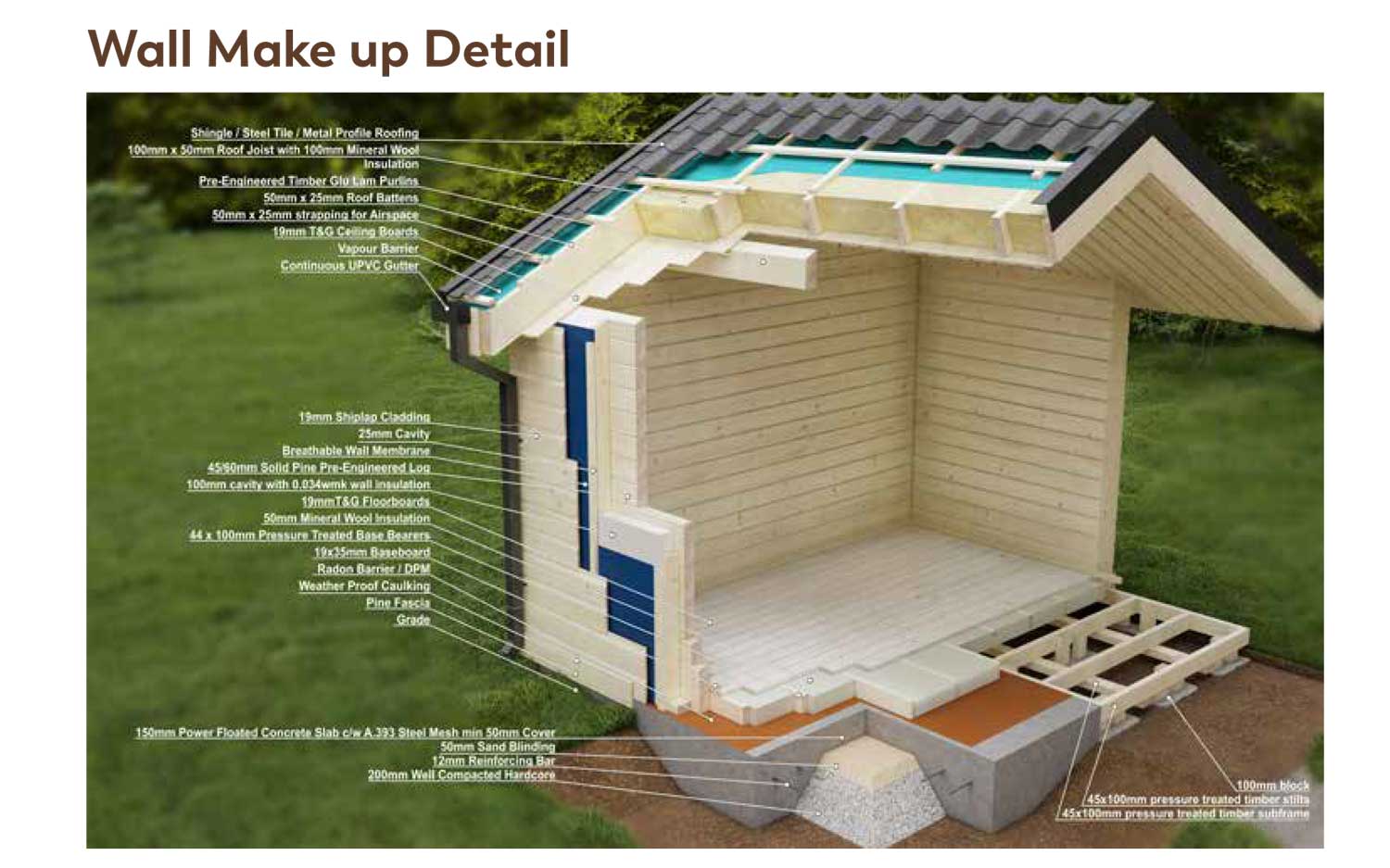
That logic still holds to a point when considering energy efficiency. But modern cabins — especially the type most people are buying now — are built very differently, often incorporating cavity walls for better insulation.
They’re no longer just a stack of timber logs.
They’re a combination of:
- solid timber walls, particularly those made from spruce, enhance the durability of log homes.
- insulation
- roofing systems
- Proper windows and doors are essential for energy efficiency in a log cabin.
- and all the parts that make them actually usable day to day, especially in quality log cabins.
So while wall thickness still matters, it’s only one part of the overall picture.
What 44mm Actually Means Today
There’s still a bit of a perception that 44mm is a “basic” option.
In reality, that’s a bit outdated.
Most cabins now — even at this level — are being used for things like summerhouse24 Ireland.
- home offices
- gyms
- studios, including quality log cabins, are becoming increasingly popular across Ireland.
- general everyday spaces
And the reason that works is because they’re not just 44mm of timber on their own.
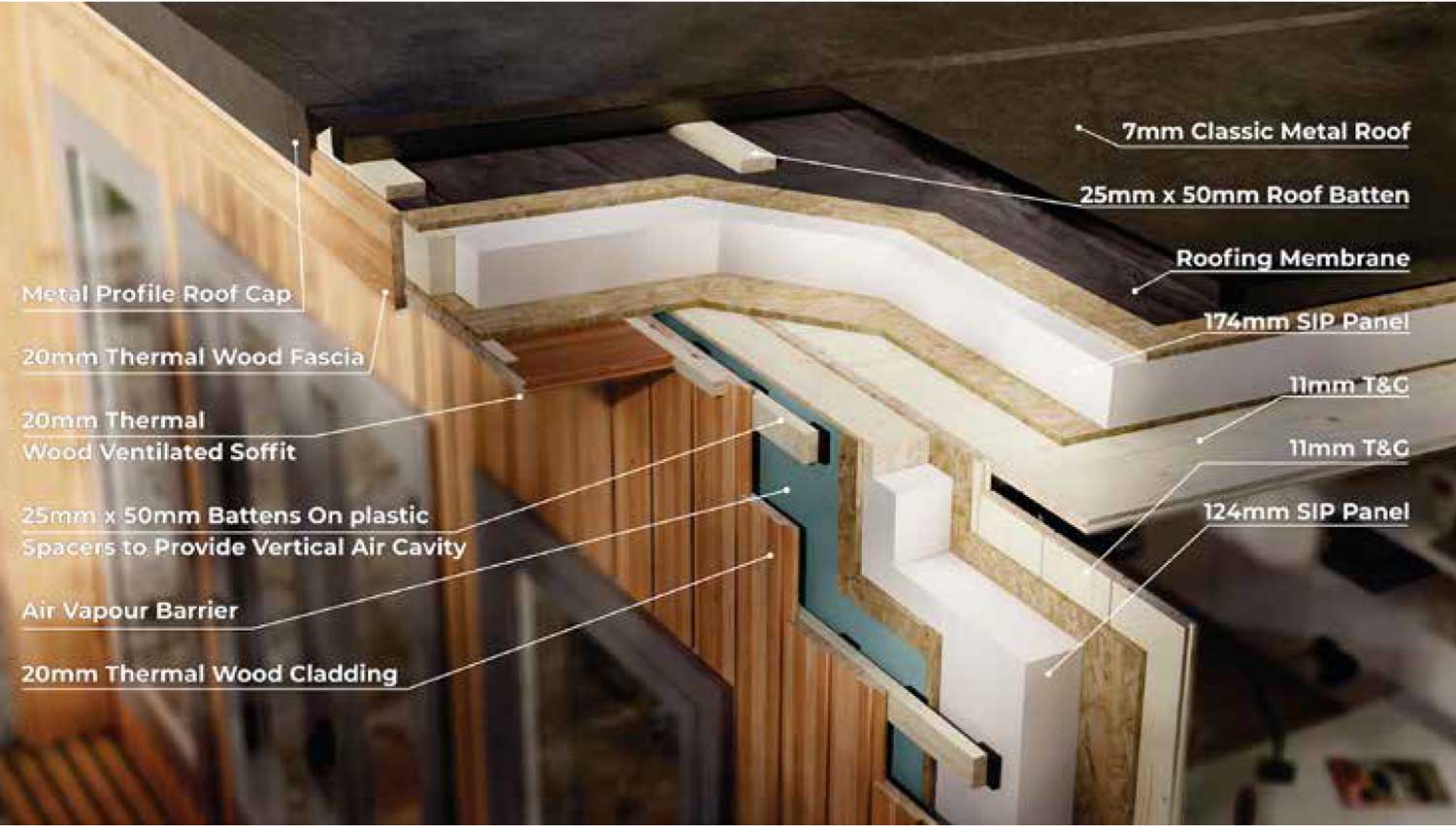
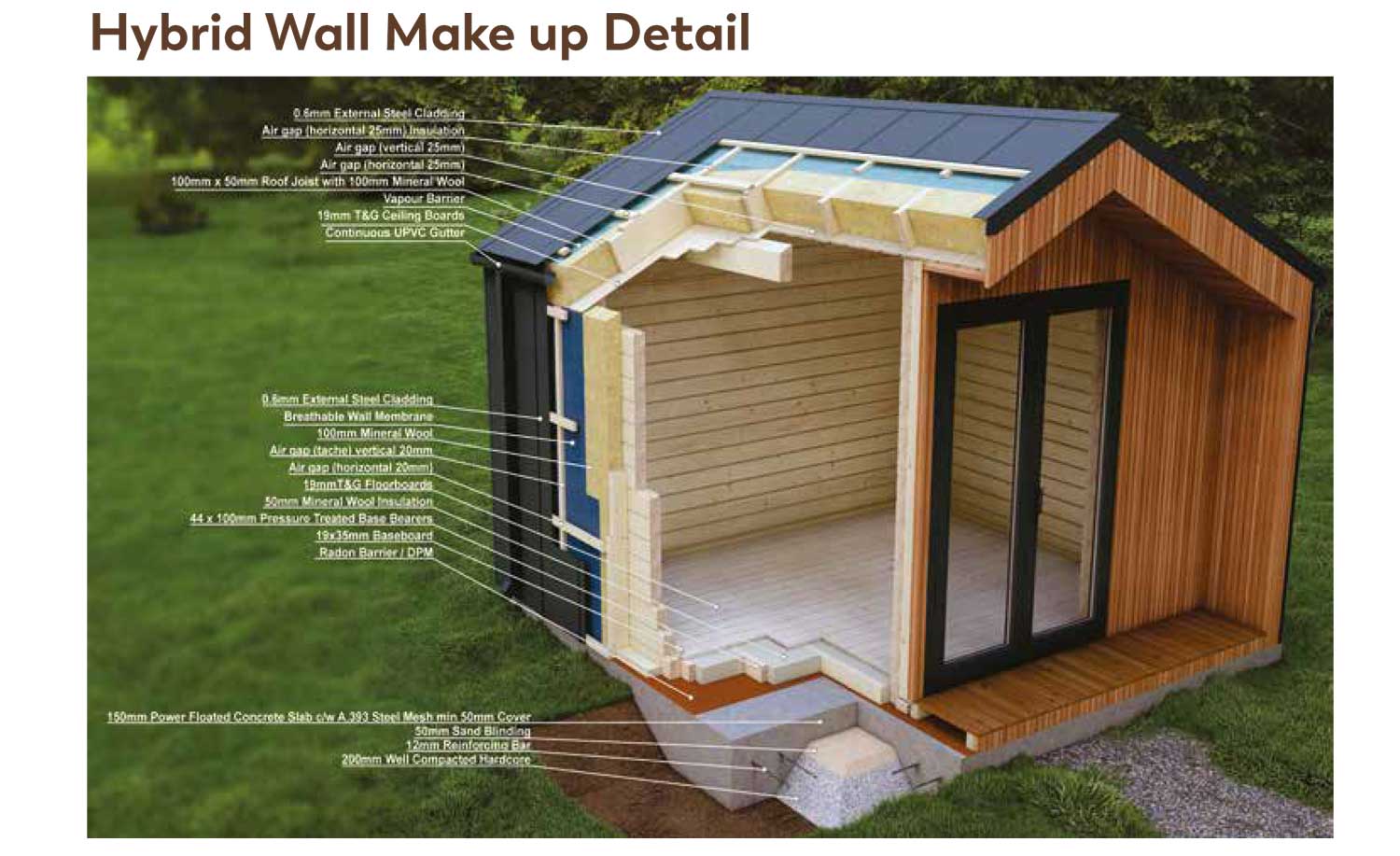
They’re usually combined with:
- Insulated roofs contribute significantly to the energy efficiency of log cabins in Ireland.
- insulated floors
- proper glazing is crucial for maintaining warmth in log cabins Ireland.
- and a full build-up that makes the space comfortable to use
So even though the visible wall is 44mm, the actual structure ends up being much more substantial once everything is included.
That’s why a lot of people are surprised by how well these cabins perform, especially in cooler months.
Where 58mm Fits In
Moving up to 58mm does give you a slightly heavier structure, but it is not always the huge leap people expect.
What you’ll usually notice is:
- a slightly more solid feel overall
- a bit more weight in the structure
- marginally better natural insulation from the timber itself
This can suit people who know the cabin will be used regularly and want that extra sense of solidity.
That said, once insulation is part of the overall cabin system, the difference between 44mm and 58mm may not be as dramatic as people first assume.
And What About 70mm?
70mm is generally seen as the heavier, higher-end option for log houses.
It can make sense for larger cabins, more permanent-style buildings, or customers who simply prefer a more substantial structure.
But again, it’s worth keeping it in context.
70mm timber on its own is only one part of the build for a quality log cabin in Ireland. It starts to make the biggest difference when it is combined with:
- insulation
- good glazing
- proper installation
So it is not simply a case of “70mm equals warm”. The full cabin specification matters just as much in ensuring a quality log cabin experience.
What Actually Makes a Cabin Comfortable in Ireland
Ireland does not usually have extreme cold, but it does have plenty of damp, wind and changeable weather.
That means comfort is not just about the timber thickness. The things that really matter are:
- insulation, especially in the roof and floor
- how well the cabin is sealed
- the quality of the windows and doors
- how well the cabin is assembled overall
These are the details that decide whether a cabin feels like a proper usable space, or somewhere that only gets used occasionally.
A Better Way to Think About It
Instead of focusing only on wall thickness, it helps to look at the whole cabin system, including planning permission.
Things like:
- what’s included as standard
- how the walls are built up in log homes can significantly affect insulation.
- whether insulation is part of the system
- What the cabin will actually be used for can influence the choice of cladding.
can make a much bigger difference in real-world use than log thickness alone.
For everyday comfort, a well-specified 44mm cabin can often be more practical than a thicker cabin with fewer supporting features.
So… Which One Should You Go For?
The best choice depends on how you plan to use the cabin.
44mm tends to work well if:
- you’re choosing a modern, fully built-out cabin system
- the cabin will be used as an office, gym, studio or everyday garden space, perfect for timber living.
- You want good value without over-specifying timber frame components.
58mm makes sense if:
- You want a slightly heavier build, especially for residential log cabins.
- the cabin will be used frequently, making it essential to consider the quality of materials in log cabins Ireland.
- you prefer something a bit more substantial
70mm is worth considering if:
- It’s a larger or more permanent-style cabin that often requires planning permission.
- you want extra weight and presence in your log homes to ensure stability and comfort.
- it’s part of a higher-end overall setup
The Part Most People Only Realise Afterwards
At the start, it’s easy to focus on the specification sheet — wall thickness, size, roof type and upgrades.
But once the cabin is built, what people usually care about most is how the space actually feels.
That comes down to:
- how warm it is in winter
- how usable it is day to day depends on the quality of the materials used in log cabins Ireland.
- how solid everything feels
- and how well it holds up over time
And that’s not down to wall thickness alone.
Wall thickness still matters. It is absolutely worth considering when comparing log cabins.
But it is no longer the only thing that decides whether a log cabin in Ireland is warm, practical or suitable for regular use.
Modern cabins are better understood as complete systems. The logs matter, but so do the insulation, glazing, roof, floor, seals and installation quality.
So when comparing different options, look at the full specification rather than the wall thickness on its own.
That’s usually what leads to the better long-term decision.
Related search terms: wall insulation, 45mm log cabin, double wall log cabin, timber structure, buying a log cabin, thick log cabin walls, cement board cladding, building regulations Ireland, timber modular home, garden room living space, additional insulation, Irish weather conditions, roof insulation, energy efficient log cabins, residential log cabin use, single wall cabins, log cabin design, tongue and groove timber, minimum wall thickness 44mm, insulation materials, floor insulation, Scandinavian log cabins, log cabin doors and windows, fully insulated cabins, cosy garden rooms, double glazed windows, timber frame construction, pressure treated floor bearers, weather protection log cabin, durable timber cabins, 75mm log cabin, 90mm log cabin, insulation upgrade options, Kingspan insulation, structural integrity timber cabin, internal cabin space, thermal mass timber, reduce heating costs, pitched roof cabins, natural wood finish, guest accommodation cabins, garden cabin home office, insulated garden rooms Ireland
Leave A Comment