
Table of Contents
How Much Heat Is Lost Through Windows in a Log Cabin?
What Type of Windows Are Used in Log Cabins?
Why Draughts Are Often the Real Problem
Condensation: What It Tells You
How Windows Affect How Often You Use the Cabin
How This Links Back to Wall Thickness
What Should You Actually Ask Before Buying?
The Difference You Notice Later (Not on Day One)
What People Miss When They’re Comparing Cabins
How Much Heat Is Lost Through Windows in a Log Cabin?
This usually only comes up after someone has gone through their first winter with a cabin.
Before that, most people are focused on size, layout, wall thickness… the obvious things.
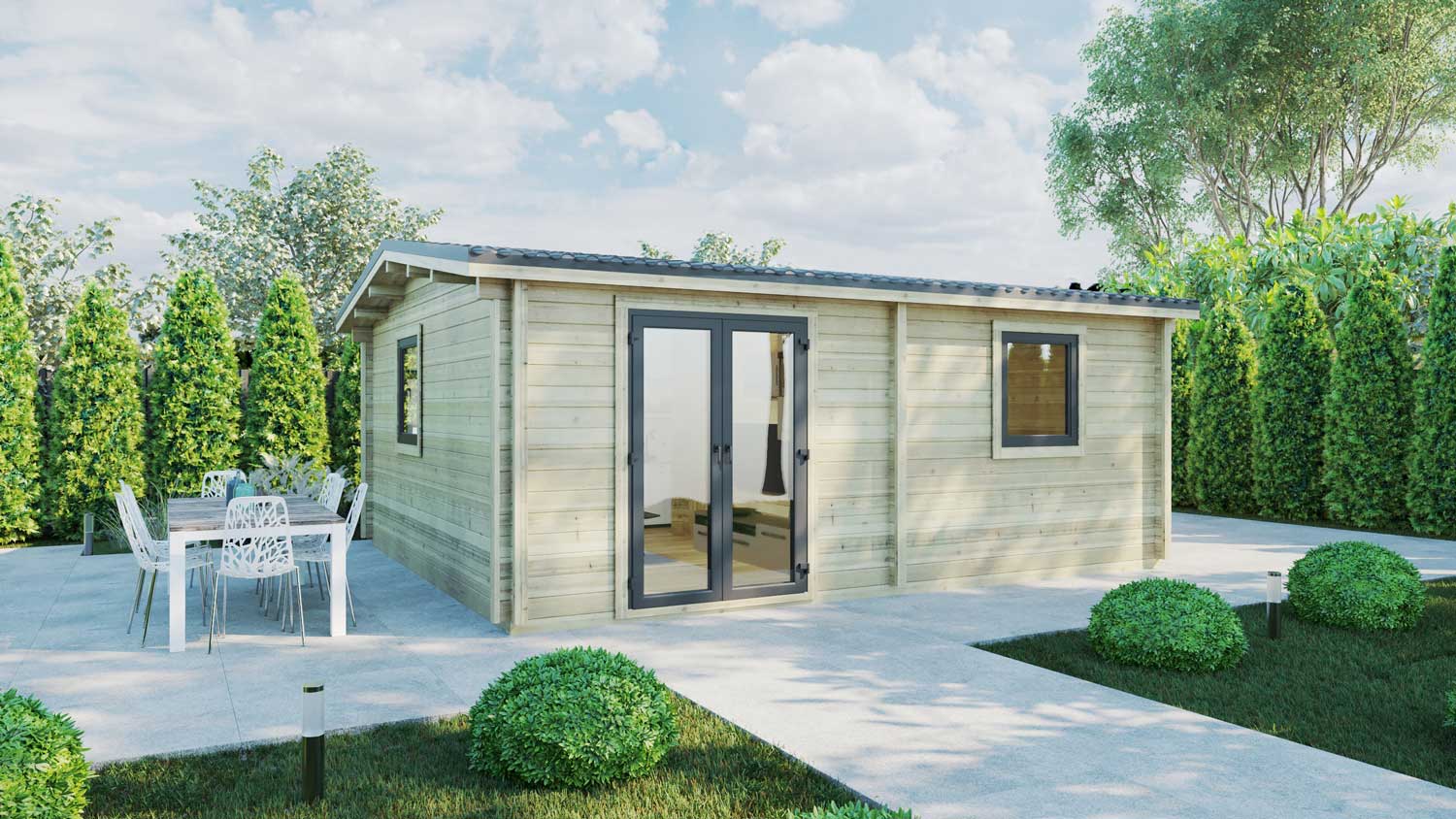
Windows don’t get much attention, but they can greatly influence the look of your log cabin.
But they should.
Do windows actually make that much difference?
Short answer — yes.
In a lot of cabins, the weakest point for heat isn’t the walls, but the windows for your log cabin. It’s the glass used in the windows for your log cabin.
And more importantly, the areas around the glass.
If the window system isn’t great, you’ll notice it quickly enough:
- the room takes longer to warm up
- it cools down faster than expected
- there’s always a slight chill near the window
Nothing dramatic — just enough to make the space feel not quite right.
What Type of Windows Are Used in Log Cabins?
This is where things vary a lot more than people realise.
Two cabins can look similar online, but the window setup can be completely different.
Generally, you’re looking at a few types.
Basic timber windows
These are the more traditional style of log cabins Ireland.
They look the part — and for light use, they can be fine.
But they depend a lot on how well they’re made and fitted.
Some are solid. Others… less so.
Timber double-glazed units
A step up.
Better for warmth, better overall performance.
But still very dependent on build quality.
Modern uPVC systems
This is where cabins have moved in the last few years, focusing on the overall look of your log.
Instead of “shed-style” windows, you’re getting something closer to what you’d see in a house.
Better seals. Better fit. Less movement over time.
You don’t really notice it on day one.
But you definitely notice it in January.
Some cabins now include these higher-spec systems as standard, which wasn’t always the case.
Why Draughts Are Often the Real Problem
When someone says their cabin feels cold, it’s rarely just “lack of insulation”.
More often, it’s air getting in where it shouldn’t, which can be mitigated by using standard windows.
And windows are usually the main culprit.
Where does that come from?
- frames that aren’t sealed tightly
- doors that shift slightly over time
- small gaps that don’t seem like much — but add up
Timber moves, especially in the context of building a log cabin from the inside. That’s normal.
The difference is whether the window system is designed to deal with that movement… or not.
Higher-quality systems tend to stay tight.
Lower-quality ones can loosen slightly, and that’s when you start to feel it in your garden office.
Condensation: What It Tells You
Condensation is one of the easiest ways to spot a difference in window quality.
Most people don’t think much about it — but it’s actually a useful indicator.
What should you look for?
- a small amount in cold weather — normal
- constant heavy condensation — not ideal
If windows are performing well, you’ll still get some moisture now and then.
But it shouldn’t be excessive.
And it definitely shouldn’t feel like something you have to manage every day in your garden office.
How Windows Affect How Often You Use the Cabin
This is probably the biggest difference in real terms.
Not specs. Not numbers related to log cabins Ireland.
Just… whether you actually use the space.
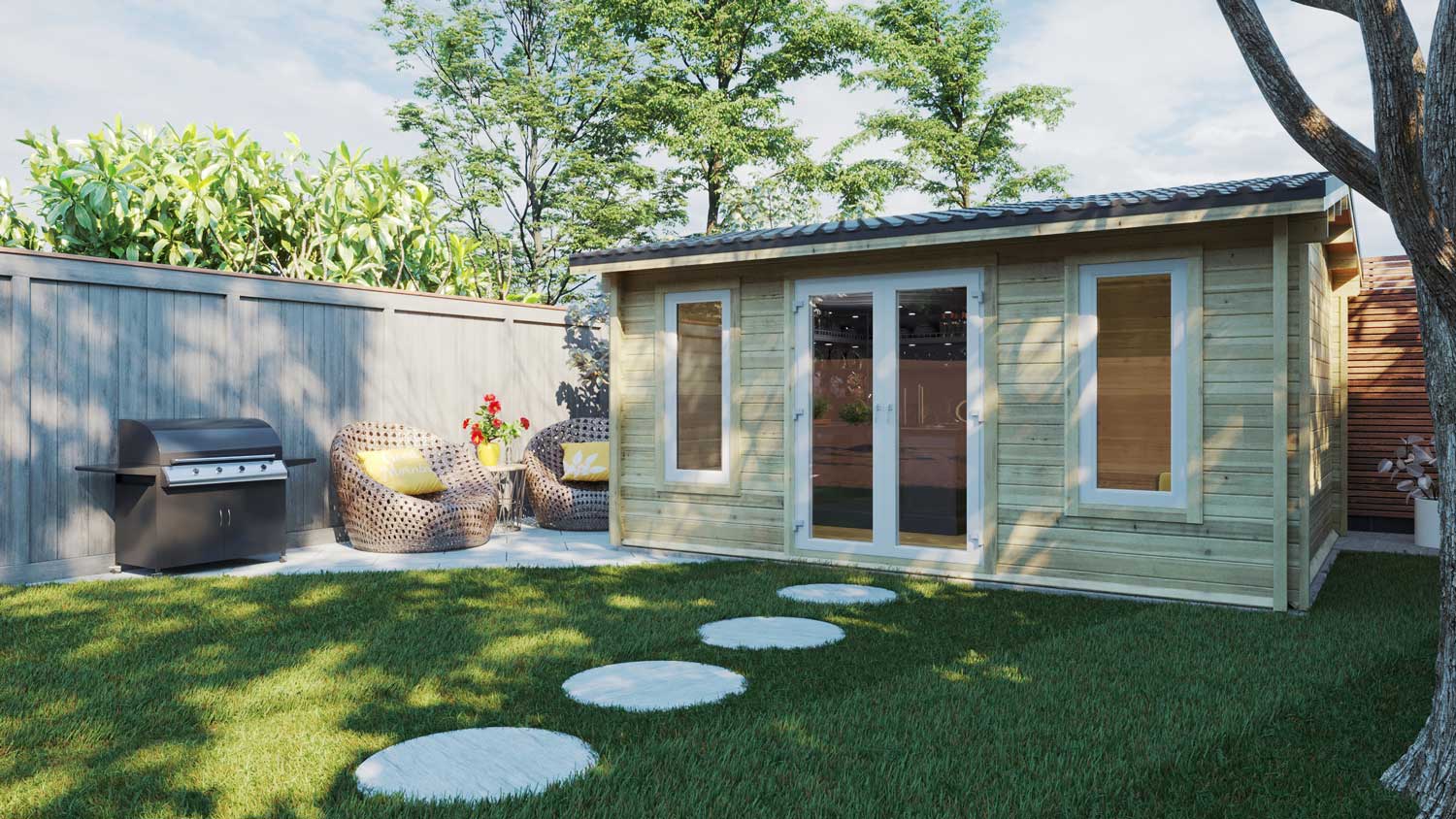
A cabin might look great, particularly when it’s designed as a log cabin from the inside.
But if it’s cold in the morning, or takes ages to warm up, you’ll naturally use your garden office less.
That’s where better glazing and sealing make a difference.
It removes friction.
You go out, switch it on, and it just works.
That’s what people are really after, even if they don’t describe it that way.
How This Links Back to Wall Thickness
This ties back to the wall thickness question and the look of your log cabin.
Because a lot of people assume that’s the main factor in warmth.
But in reality, it’s more balanced than that.
You can have thick walls and average windows… and the space feels average.
Or slightly thinner walls and better windows… and it feels far more usable.
That’s why looking at one spec on its own can be misleading, particularly when considering the wide range of log options available.
What Should You Actually Ask Before Buying?
You don’t need to get too technical, but understanding what options are avilable can help.
But a few simple questions go a long way:
- Are the windows double glazed as standard?
- What type of frame is used for your garden office?
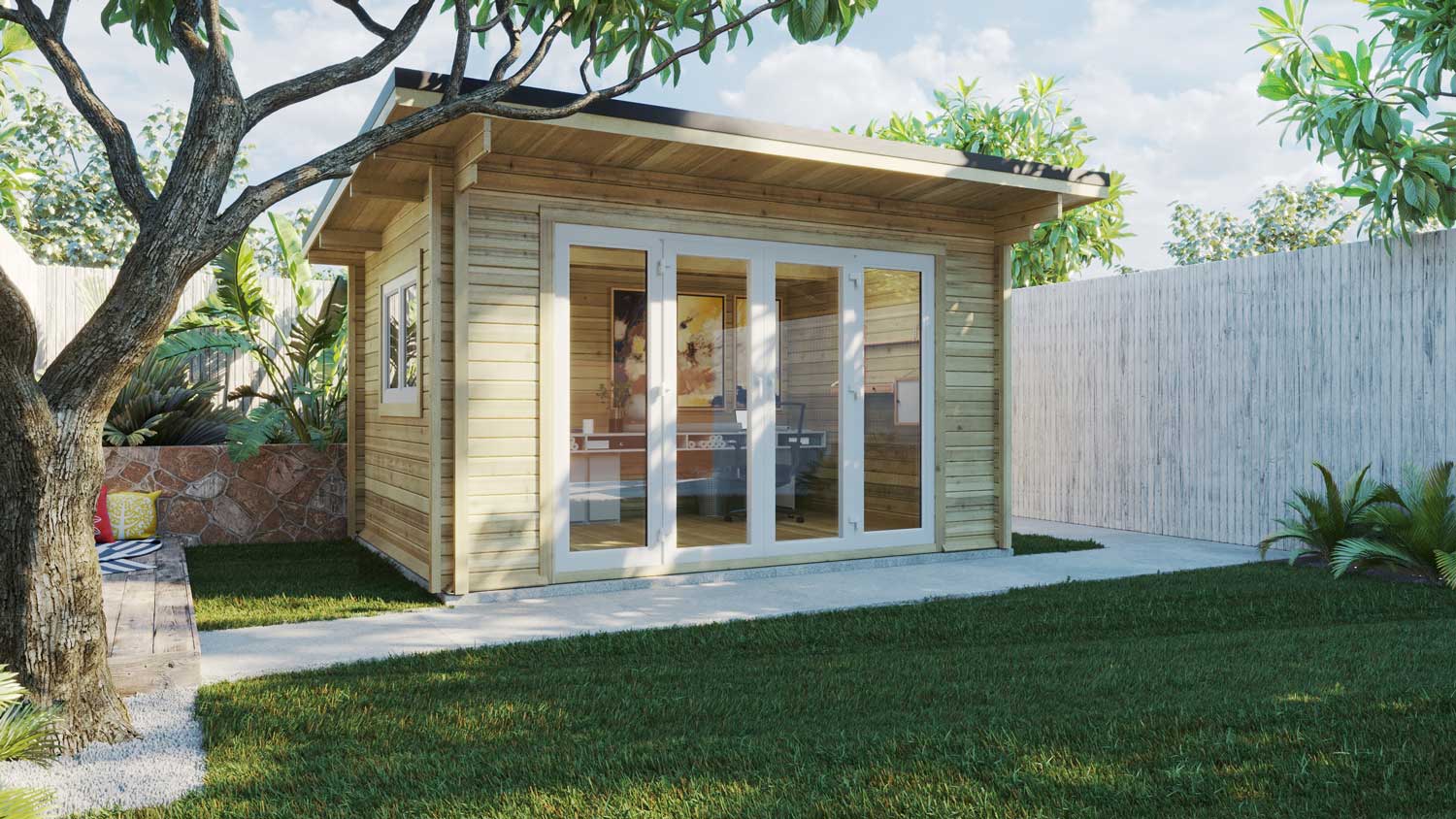
- Do the doors have proper locking systems that enhance the overall look of your log cabin?
If the answers are vague, that usually tells you something.
If they’re clear and specific about features like hinge quality, even better.
The Difference You Notice Later (Not on Day One)
At the start, most cabins feel the same.
Everything is new, including a wide range of log cabin designs. Everything looks good.
It’s only after a few months that the differences in quality show up, particularly in the windows for your log cabin.
Not in a big way — just in small things:
- how warm it feels early in the day
- whether there’s a slight draught near the door
- how quickly it heats up
That’s where better window systems tend to stand out.
Quietly, more than anything.
Windows and doors aren’t the most exciting part of choosing a log cabin, but they significantly affect the look of your log cabin.
But they’re one of the most important once you start using it properly.
If you’re comparing options, it’s worth looking beyond the obvious specs.
Because the cabins that feel best to use aren’t always the ones that look strongest on paper.
They’re the ones where everything works together — including the parts people don’t always think about straight away.
What People Miss When They’re Comparing Cabins
Most people start in roughly the same place. Price. Size. Wall thickness if they’ve been reading up on it a bit. Fair enough — that’s the obvious stuff and it matters.
The bit that gets glossed over is what’s actually included once you look past the headline figure. Windows and doors mostly. Nobody really thinks about doors when they’re picking a cabin. Why would you.
Two cabins can look nearly the same online. Same sort of money, same footprint, photos that could be from the same back garden. You’d swear there’s nothing in it.
But the build behind them isn’t always the same.
Glazing’s a good example. On one cabin, it might come as standard, on another, it’s a few hundred extra, and you don’t spot it until you’re deep into a quote. Frames vary, too, especially when considering the overall look of your log cabin. Doors especially — there’s a real difference between one that sits properly into the frame and shuts with a bit of weight to it, and one that doesn’t.
That stuff doesn’t show up in a product photo.
It tends to come out later. Either when you’re asking the more awkward questions about the standard window features, or after the cabin’s already up and you’re using it through a wet February.
That’s usually when people cop on to what they were actually comparing.
It isn’t really a good cabin/bad cabin thing. One just feels more sorted. Quieter. The door doesn’t rattle when the wind picks up. The windows don’t fog the way you half expected them to. Small things, like the quality of the hinge, but you notice.
You also stop noticing, which is the better sign. It just works and you get on with using the room.
So the headline specs are grand as a starting point. They’re just not the full picture. What’s included — the bits people don’t think to ask about — is usually where one cabin pulls ahead of the other.
And it’s the kind of thing that’s much easier to sort out before the order goes in than after.
Related search terms: upvc windows and doors, range of log cabins, wooden windows, pvc windows, bedroom log cabin, log cabin homes, wooden frames, irish log cabins, timber frames, large windows, log houses, double-glazed tilt and turn windows, window frames, high quality windows, glazed windows, u-value, ventilation, casement windows, multi point locking, energy-efficient windows, insulation properties, solar gain, south facing windows, reducing heat loss, natural beauty of timber, german quality windows, built to last, 44mm log cabin
Interested in Modern Garden Room Trends in Ireland – check out our latest blog post for full details
Leave A Comment